
Ingredient
Potato
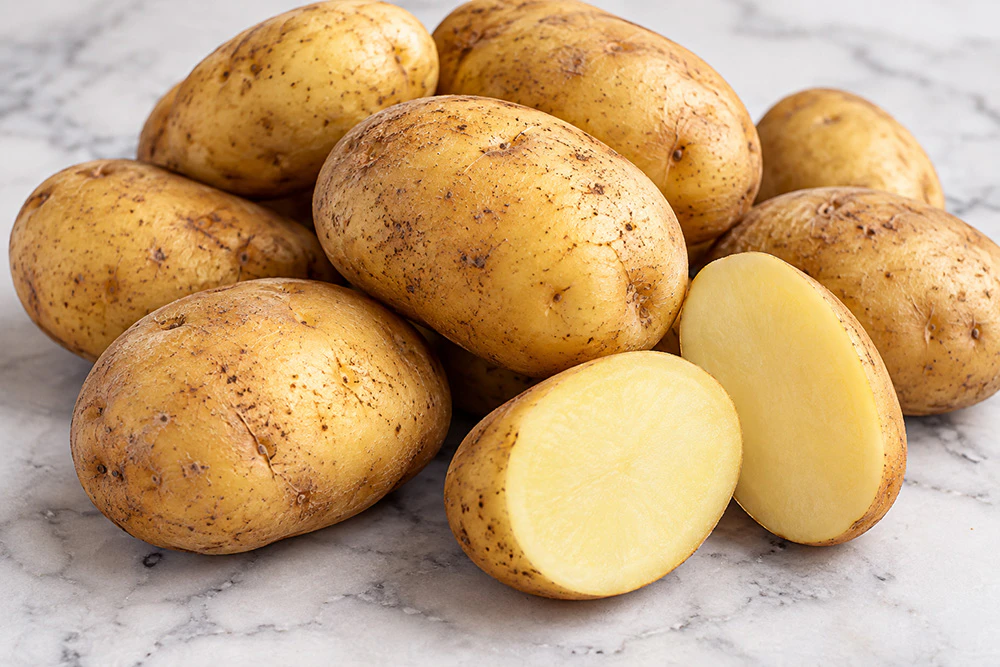
Potatoes are a versatile ingredient that can be boiled, fried, roasted, or stewed. Different types of potatoes work better for different dishes: some hold their shape well, while others become soft and fluffy, making them ideal for creamy mashed potatoes or a crispy finish.
Contents
How to Choose the Right Potatoes
Potatoes differ not only in variety and skin color, but also in texture and starch content. This is why some potatoes remain firm after cooking, while others quickly become soft and fluffy.
Starchy, floury potatoes are a good choice for mashed potatoes, roasting, potato pancakes, and French fries. Their flesh becomes soft and fluffy when cooked.
Waxy potatoes contain less starch and hold their shape better. They are especially suitable for salads, soups, stews, and cooking whole.
All-purpose potatoes fall somewhere in between and work well for most everyday dishes. They can be boiled, fried, or roasted.
If you don't know the variety, it is often more useful to consider how the potato behaves when cooked rather than relying on its name.
New Potatoes
New potatoes are harvested before the tubers reach full maturity. They have thin skins and a more delicate texture.
There is usually no need to peel them with a knife. Simply wash them thoroughly, removing any remaining soil and damaged areas.
New potatoes are particularly good boiled or roasted whole, as well as in warm salads and dishes served with sauces.
Should You Rinse Potatoes After Cutting?
It depends on the dish.
For frying and French fries, rinsing cut potatoes in cold water helps remove some of the surface starch. After rinsing, dry them very thoroughly, as excess moisture can prevent a crisp, golden crust from forming.
For mashed potatoes, there is usually no need to soak the potatoes for an extended period.
For soups and stews, rinsing is generally unnecessary unless the recipe calls for a clearer broth or less starch.
How to Make Crispy Potatoes
One of the main reasons potatoes fail to brown properly is excess moisture.
Before frying or roasting, dry cut potatoes thoroughly. Try to cut the pieces to roughly the same size so they cook evenly.
Avoid overcrowding the pan or baking sheet. When potatoes are packed too closely together, the steam they release makes it harder for a crisp crust to develop.
For roasting, a relatively high temperature is usually best. Toss or turn the potatoes during cooking so they brown evenly on different sides.
How to Boil Potatoes
Potatoes of a similar size cook more evenly. Large potatoes can be cut into several pieces.
For basic boiled potatoes, place them in a pot and add enough water to cover them. Bring the water to a boil, then cook at a moderate simmer until tender.
Cooking time depends on size. Small potatoes usually take around 15–20 minutes, while larger ones will need longer.
The easiest way to check for doneness is with a knife or thin skewer. It should slide into the potato easily, without firm resistance.
For mashed potatoes, drain them thoroughly after cooking and allow excess moisture to evaporate before adding butter and milk.
Why Do Cut Potatoes Turn Dark?
Once peeled and cut, potatoes can darken fairly quickly when exposed to air. This is a natural oxidation process.
If you are not going to cook the potatoes immediately, place them in cold water. The water limits contact with air and slows down discoloration.
However, avoid leaving cut potatoes in water for longer than necessary, as some soluble compounds and starch will leach into the water.
How to Store Potatoes
Potatoes are best stored in a dark, cool, dry, and well-ventilated place, away from direct sunlight.
Exposure to light can cause potatoes to turn green. The green color itself comes from chlorophyll, but increased levels of naturally occurring glycoalkaloids may develop at the same time.
Potatoes that are heavily green, bitter, or extensively sprouted are best discarded rather than used for cooking.
Quick Facts
For Mashed Potatoes
Choose floury, higher-starch potatoes for a softer, fluffier texture.
For Salads
Waxy potatoes are a better choice because they hold their shape well after boiling.
For Crispy Potatoes
After rinsing, dry the potatoes thoroughly before frying or roasting.
New Potatoes
Their thin skins can usually be left on — simply wash the potatoes thoroughly.
Storage
Light encourages potatoes to turn green, so they are best stored in a dark place.