
Ingredient
Chicken
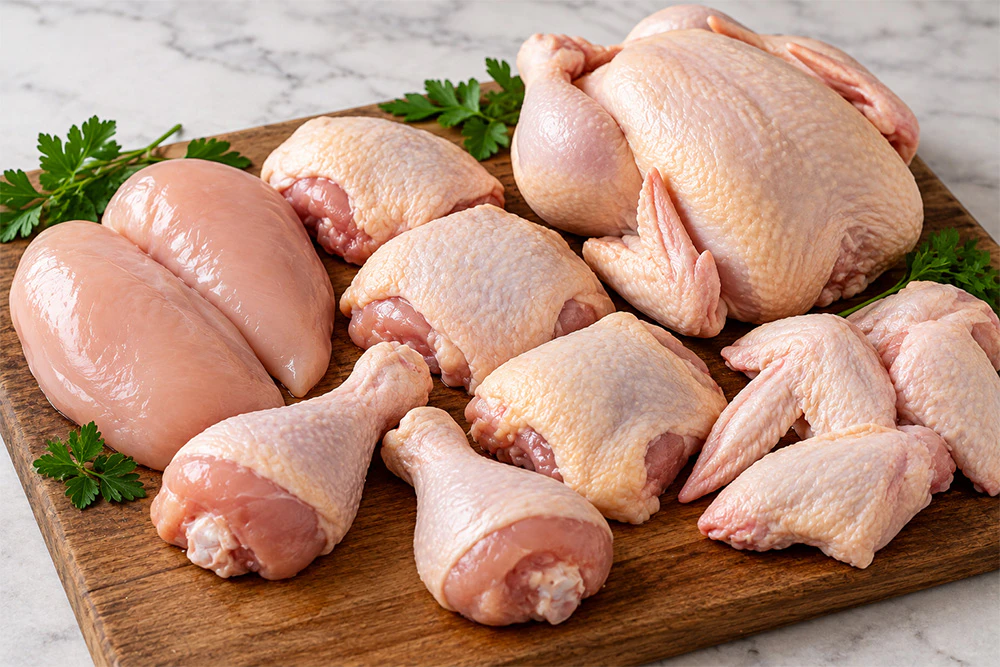
Chicken is a versatile ingredient that works well in soups, salads, roasted dishes, stir-fries, and stews. Different cuts vary in fat content and texture: chicken breast cooks quickly, thighs and drumsticks tend to stay juicier, while a whole chicken is ideal for roasting and making broth.
Contents
Which Cut of Chicken to Choose
Different cuts of chicken are better suited to different cooking methods. Replacing one cut with another can noticeably affect the juiciness, richness, and cooking time of a dish.
Chicken breast and fillets are lean, tender, and quick to cook. They work well in salads, patties, cutlets, pasta dishes, quick skillet meals, and simple baked dishes. Their main drawback is that they can easily become dry if overcooked.
Chicken thighs contain more fat and stay juicy even with relatively long cooking times. They are excellent for frying, stewing, and roasting. Boneless thighs also work particularly well for skewers and dishes that call for bite-sized pieces of chicken.
Drumsticks are well suited to longer roasting and stewing. They can be cooked in sauces or roasted whole.
Chicken wings contain relatively little meat but brown and crisp up very well. They are most often baked or fried and served with sauces.
A whole chicken is suitable for roasting, boiling, and making broth. When roasting a whole bird, keep in mind that the breast and dark meat cook at different rates.
Chicken offal — such as liver, hearts, and gizzards — differs considerably from regular chicken meat in flavor, texture, and cooking methods. Liver cooks quickly and stays tender when cooked carefully, while hearts and gizzards generally require longer cooking.
How to Keep Chicken Breast Juicy
Chicken breast is low in fat, so it can quickly become dry when cooked for too long.
Try to use pieces of roughly the same thickness. Very thick chicken breasts can be sliced horizontally or gently pounded to create a more even thickness.
After cooking, let larger pieces of chicken rest for a few minutes before slicing. This allows the juices to redistribute throughout the meat.
The easiest way to check doneness accurately is with a kitchen thermometer. Chicken should reach a safe internal temperature of 74°C (165°F) in the thickest part of the meat.
Should You Wash Chicken Before Cooking?
Raw chicken should not be washed under running water. Water can splash microorganisms from the raw meat onto the sink, utensils, work surfaces, and other foods.
If there is excess moisture on the surface, gently pat the chicken dry with a paper towel. Discard the towel immediately and wash your hands thoroughly afterward.
Knives, cutting boards, and any surfaces that have come into contact with raw chicken should also be washed thoroughly.
How to Get a Golden-Brown Crust
Before frying or roasting chicken, dry the surface thoroughly. Excess moisture turns into steam and makes it harder for the meat to brown.
Make sure the pan is properly heated and avoid overcrowding it with chicken pieces.
When roasting skin-on chicken, the skin browns better if the surface is dry and lightly coated with oil.
If you are cooking skin-on chicken in a pan, avoid turning it constantly. Give the skin enough time to brown properly before flipping.
How to Marinate Chicken
A marinade can add aroma and flavor to chicken, but a longer marinating time does not always produce a better result.
A simple marinade can be made with vegetable oil, spices, garlic, and fresh or dried herbs. Yogurt, mustard, soy sauce, and small amounts of acidic ingredients also work well.
Always marinate chicken in the refrigerator, not at room temperature.
Marinade that has been in contact with raw chicken should not be used as a ready-to-serve sauce unless it has first been thoroughly cooked.
How to Tell When Chicken Is Done
The color of the meat and the clarity of its juices are not always reliable indicators of doneness.
The most reliable method at home is to use a kitchen thermometer. Measure the temperature in the thickest part of the meat without touching the bone.
Chicken should reach a safe internal temperature of 74°C (165°F).
For a whole chicken, check the temperature in several of the thickest areas, particularly the breast and thigh.
How to Store Raw and Cooked Chicken
Raw chicken should be stored in the refrigerator separately from foods that will be eaten without further cooking. Keep it in a sealed container or secure packaging to prevent raw chicken juices from coming into contact with other foods.
The safest way to thaw chicken is gradually in the refrigerator. Other safe methods can be used when faster thawing is necessary, but raw chicken should not be left on the kitchen counter for several hours.
Once cooled, cooked chicken should also be refrigerated in a covered container.
Quick Facts
For Quick Cooking
Chicken breast cooks faster than most other cuts, but it is also particularly easy to overcook and dry out.
For Juicy Chicken
Thighs and drumsticks contain more fat and generally stay juicier during longer cooking.
For a Golden-Brown Crust
Dry the surface of the chicken thoroughly before frying or roasting.
Safe Internal Temperature
Cooked chicken should reach an internal temperature of 74°C (165°F).
Should You Wash It?
There is no need to wash raw chicken under running water — splashes can spread contamination to nearby surfaces.
Thawing
The simplest safe method is to thaw chicken gradually in the refrigerator.