
Ingredient
Tarragon
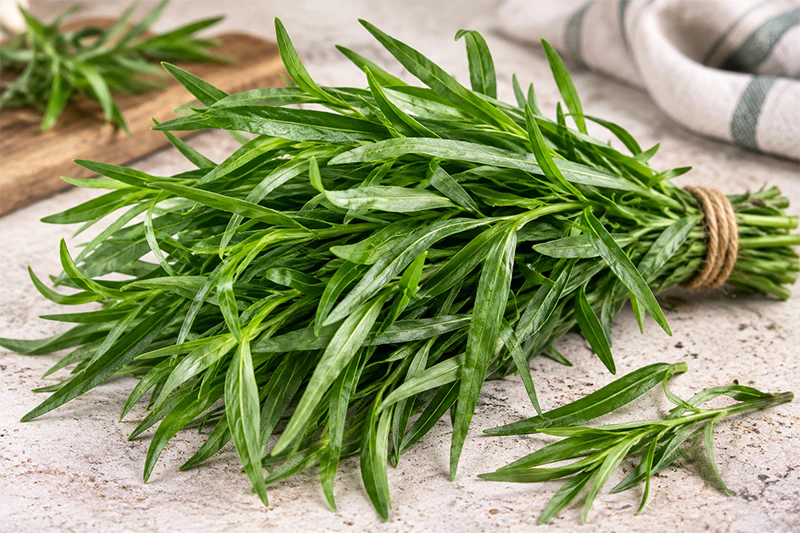
Tarragon is an aromatic herb with a fresh flavor and distinctive anise-like notes. It can be used fresh or dried and pairs well with poultry, fish, eggs, and vegetables. Tarragon is also commonly used in sauces, dressings, marinades, and drinks. Tarragon has a fairly pronounced flavor, so it is best to start with a small amount, especially if you are using it for the first time. Fresh tarragon is at its most aromatic when it is not exposed to prolonged heat.
Contents
How to Use Tarragon
Fresh tarragon can be added to salads, sauces, dressings, marinades, and cooked dishes. Its distinctive flavor works well with meat and fish as well as vegetables.
Tarragon pairs particularly well with chicken, fish, eggs, and potatoes. It can be used in creamy or buttery sauces and combined with mustard, lemon juice, or vinegar.
Finely chopped fresh tarragon can also be added to salad dressings, omelets, egg salads, and potato salads. It works well in homemade lemonades and other cold drinks too.
Because the flavor can be quite strong, start with a small amount and add more to taste.
When to Add Tarragon
Fresh tarragon is best added toward the end of cooking or just before serving. This helps preserve its fresh aroma and characteristic anise-like notes.
Prolonged heat can soften the flavor of fresh tarragon. For cooked dishes, you can add some during cooking and reserve the rest for the end.
Dried tarragon can be added earlier, giving it more time to release its flavor as the dish cooks.
How Much Tarragon to Use
Tarragon has an intense flavor, so there is no single amount that works for every dish.
If you are using fresh tarragon for the first time, start with about 1 teaspoon of finely chopped leaves for a small batch of sauce or dressing. Taste it and add more if needed.
The same approach works for cooked dishes: start small and adjust to taste. You can always add more tarragon, but it is difficult to correct a dish once its anise-like flavor becomes overpowering.
Fresh vs. Dried Tarragon
Fresh tarragon has a brighter, fresher, more herbaceous flavor. It is particularly good in salads, sauces, dressings, and dishes where the herb is added shortly before serving.
Dried tarragon is convenient for dishes with longer cooking times, such as sauces, stews, and marinades. Its flavor differs somewhat from the fresh herb and develops gradually during cooking.
When substituting dried tarragon for fresh, do not use the same quantity — dried herbs are more concentrated.
What Goes Well with Tarragon
Tarragon pairs well with chicken, fish and seafood, eggs, potatoes, and other vegetables.
It also works particularly well with butter, cream, mustard, lemon, vinegar, and garlic.
Some simple combinations to try:
chicken + tarragon + cream
chicken + tarragon + mustard
fish + tarragon + lemon
fish + tarragon + butter
potatoes + tarragon + mustard
How to Choose Tarragon
Fresh tarragon should have bright green leaves without significant wilting or dark spots. Good-quality fresh tarragon should also have a noticeable characteristic aroma.
Different types of tarragon can vary considerably in flavor. French tarragon is prized for its distinctive sweet, anise-like aroma. Russian tarragon is generally less aromatic and may have a coarser or slightly more bitter flavor.
As a result, two bunches that look quite similar can differ noticeably in flavor intensity.
How to Store Fresh Tarragon
Fresh tarragon can be stored in the refrigerator in several ways.
One option is to trim the stems slightly, place the herbs in a small amount of water, and loosely cover them with a bag.
Alternatively, gently wrap the tarragon in a slightly damp paper towel and store it in a container or bag in the refrigerator.
Remove any damaged or wilted leaves before storing. It is usually best to wash tarragon just before using it, or make sure it is thoroughly dry before storing.
Quick Facts
For Cooked Dishes
Add fresh tarragon toward the end of cooking to help preserve its aroma.
Using Tarragon for the First Time?
Start with a small amount — tarragon has a fairly intense flavor.
For Sauces
Tarragon pairs particularly well with cream, butter, mustard, lemon, and vinegar.
Fresh or Dried?
Fresh tarragon is ideal for salads, dressings, and finishing dishes, while dried tarragon works well in recipes with longer cooking times.
Storage
Keep fresh tarragon refrigerated and protected from drying out.