
Ingredient
Strawberry
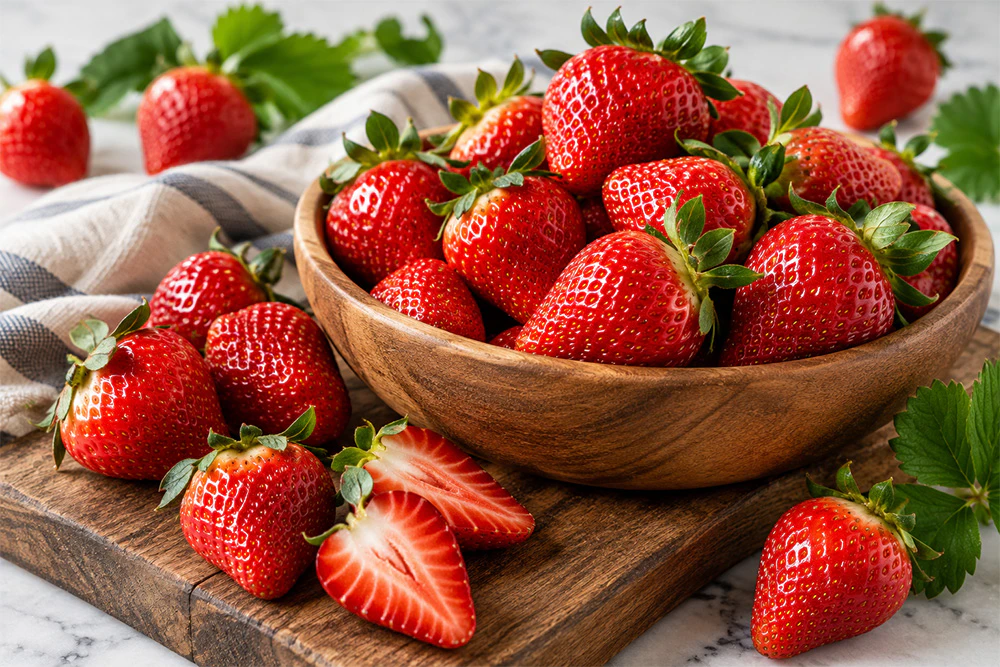
Strawberries are juicy, aromatic berries that can be enjoyed fresh or used in baked goods, desserts, drinks, sauces, and preserves. They pair especially well with cream, cottage cheese, chocolate, and other berries, but their delicate texture means they can quickly soften and release juice. Different levels of ripeness work better for different dishes: soft, ripe strawberries are ideal for purées and sauces, while firmer berries hold their shape better in salads, desserts, and baked goods.
Contents
How to Choose Strawberries
Good fresh strawberries should have a noticeable aroma, even color, and fresh green caps.
For serving whole, decorating desserts, or baking, choose firm berries without damaged areas. They hold their shape better when sliced and heated.
Very ripe and soft strawberries are still useful for cooking. They are ideal for purées, sauces, fillings, drinks, and other recipes where the shape of the berries is not important.
Strawberries with mold or other signs of spoilage should not be used.
How to Wash Strawberries Properly
It is best to wash strawberries just before using them rather than before storing them. Excess moisture causes the berries to soften and spoil more quickly.
Rinse the strawberries under cool water and gently dry them with a paper towel or clean kitchen towel.
It is best to remove the green caps after washing. Removing them beforehand allows water to enter the berries more easily and can make the strawberries watery.
Avoid soaking strawberries in water for long periods, as these delicate berries can absorb excess moisture and lose their texture.
How to Use Strawberries in Baking
Fresh strawberries can be added to cakes, muffins, pies, and other baked goods.
Make sure the berries are thoroughly dry before adding them. Large strawberries are best cut into pieces of roughly the same size.
If the berries are particularly juicy, lightly toss them with a small amount of flour or cornstarch just before adding them to the batter. This can help absorb some of the juice they release.
Fold strawberries into the batter gently and briefly to avoid crushing the berries and coloring the entire batter with their juice.
Fresh or Frozen Strawberries
Fresh strawberries hold their shape better and are particularly suitable for serving, decorating, salads, and desserts that do not require cooking.
Frozen strawberries are convenient year-round for baking, drinks, sauces, purées, and other dishes.
For baking, frozen strawberries can often be used without thawing them first. This helps prevent them from releasing too much liquid before the batter begins to cook.
Baked goods made with frozen strawberries may require slightly more cooking time.
Once fully thawed, strawberries become much softer and release a lot of juice — this is normal. Thawed berries are therefore best used in recipes where maintaining their original texture is not important.
How to Freeze Strawberries
Choose good-quality strawberries without signs of spoilage. Wash the berries, remove the green caps, and dry them thoroughly.
To prevent the strawberries from freezing into one large clump, arrange them in a single layer on a tray or board and freeze them individually first.
Once completely frozen, transfer the strawberries to a freezer bag or container and return them to the freezer.
You can also slice the berries before freezing, especially if you plan to use them later in drinks, sauces, or baked goods.
How to Store Fresh Strawberries
Fresh strawberries spoil relatively quickly, so they are best kept in the refrigerator.
Before storing, sort through the berries and remove any that are damaged or spoiled. It is generally better not to wash all the strawberries in advance — wash them just before using them instead.
Store the berries in a container where they will not be tightly packed or crushed. Excess moisture inside the container can speed up softening and mold growth.
If one strawberry begins to spoil, remove it immediately and check the remaining berries.
What to Make with Very Ripe Strawberries
Soft strawberries do not need to be discarded simply because they have lost their attractive shape.
As long as the berries have not spoiled, they can be blended into a sauce or purée, added to smoothies and drinks, or used in fillings and baked goods.
Very ripe strawberries can also be frozen in portions for later use.
Quick Facts
For Storage
Do not wash all your strawberries in advance — excess moisture causes them to spoil more quickly.
Before Baking
Dry the berries thoroughly. Very juicy sliced strawberries can be lightly tossed with flour or cornstarch.
Frozen Strawberries
For many baked goods, frozen strawberries can be added directly from the freezer without thawing.
For Freezing
Freeze the berries in a single layer first, then transfer them to a bag or container. This helps prevent them from sticking together.
If the Berries Become Soft
If strawberries are simply overripe but have not spoiled, use them for purées, sauces, drinks, or baking.
Should You Wash Them?
Strawberries should be washed before eating, but it is best to do so just before cooking or serving.